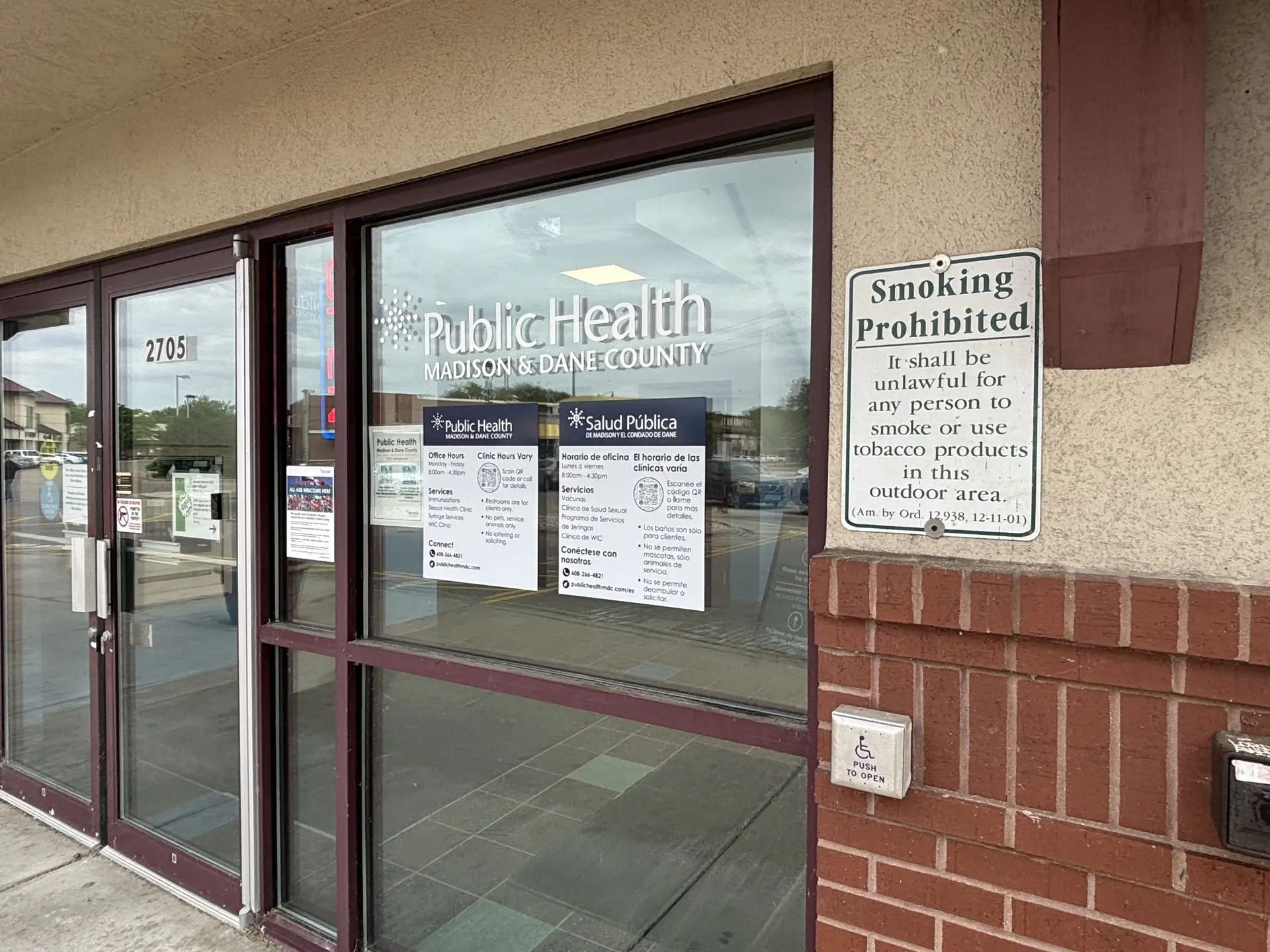


Dane County has ended an initiative to prevent overdose deaths by giving out pipes.
Four years ago, public health officials started giving people pipes and other supplies to reduce health risks associated with smoking drugs.
The program was part of the department’s broader efforts to reduce harms of drug use. For decades, syringe service programs across the country have provided harm reduction supplies to people who inject drugs. Though controversial, these programs reduce hospitalizations and overdose deaths while increasing participation in drug treatment.
But in recent years people have increasingly smoked drugs rather than injecting them. Adapting to that trend, harm reduction providers, including Public Health Madison and Dane County, began offering smoking supplies.
The pipe handouts worked. More people visited health officials to receive overdose reversal medication and other resources to prevent drug-related illnesses and injuries.
But the program was likely illegal under Wisconsin law, which allows injection supplies, not smoking materials.
Staff stopped offering smoking supplies in March. Spokesperson Morgan Finke cited a need to re-evaluate the program after the risk of COVID-19 transmission from shared pipes sharply declined and federal guidance on harm reduction shifted.
The department still offers injection supplies and other harm reduction items not intended for smoking.
“While syringes are classified as disease prevention materials under state law, smoking supplies have less clear protections,” Finke wrote in an email to Wisconsin Watch.
Halting the distribution of smoking supplies is already having an impact.
People who previously received pipes from the health office said they will buy similar supplies at smoke shops and gas stations, use makeshift pipes made from foil and soda cans or inject drugs they would have smoked, according to records and interviews obtained by Wisconsin Watch.
Others said they would likely stop visiting public health altogether.
Why did health officials hand out pipes?
Wisconsin opioid overdose deaths hit a record high in 2022, topping 1,450.
Officials found more evidence of smoking than injecting at fatal overdose scenes across the U.S. in 2022, a shift from years prior, according to the U.S. Centers for Disease Control and Prevention.
Although it still carries overdose risks, evidence shows smoking instead of injecting reduces the spread of diseases like hepatitis, HIV and bacterial infections and abscesses. It may also lower overdose risks. Regular access to new pipes can reduce how often people share pipes or use broken and unsafe materials, according to a national research study that included 2024 survey data from Public Health Madison and Dane County.
Public Health Madison and Dane County offered evidence-based resources to prevent disease and overdoses, including sterile needles, fentanyl test strips and overdose reversal medication. But the office primarily served people who inject drugs, the department’s medical director, Dr. Jonathan Temte, wrote in a 2022 letter explaining why the office would start ordering smoking supplies.
“People who use drugs by means other than injection have no reason to visit,” Temte wrote.
Temte is a family medicine physician and University of Wisconsin-Madison associate dean of public health and community engagement. He advises the health department on a limited basis.
When staff asked Temte to approve adding smoking supplies to the department’s syringe service programs, they told him Wisconsin law allowed it, Temte recalled. He focused on whether medical evidence supported the initiative.
Health research overwhelmingly supports harm reduction, he said.
Adding smoking supplies addressed two major issues: Health officials needed to get life-saving resources to people who smoked drugs. And without access to safer smoking supplies, people were more likely to share pipes or use materials that cause cuts, burns and infections.
Monthly visits jumped nearly 30% once department offices began regularly offering filters, mouthpieces and two kinds of pipes.
Even with increased visits, the department distributed 3.7% fewer syringes between 2021 and 2023.
But despite the public health benefits, Wisconsin paraphernalia laws criminalizes smoking materials.
A woman visited a public health office and asked for a pipe in early April. When she found the office no longer distributed them, she asked for syringes, according to emails obtained by Wisconsin Watch. Staff asked if she would inject the drugs she usually smokes. She said yes. Without a pipe she would dissolve powdered drugs in water and inject them.


Why did the program end?
The city-county agency was likely the state’s only syringe service provider that publicized pipes online, according to a 211 list of syringe service programs.
While reporting a feature highlighting the seemingly unique initiative, Wisconsin Watch emailed Madison City Attorney Michael Haas on March 23 to ask how the department could legally distribute pipes.
The email was forwarded to public health staff, records obtained by Wisconsin Watch show. The public health agency redacted correspondence related to the email, citing attorney client privilege.
The next day, a public health supervisor instructed a staff member to remove smoking supplies from an internal tracking system. By the end of the week the department’s website no longer mentioned safer smoking supplies.
Wisconsin’s paraphernalia law bans equipment used, designed or intended for inhaling a controlled substance. Possessing paraphernalia carries a penalty up to a $500 fine and 30 days in jail.
Dane County lowered local penalties for drug paraphernalia citations in 2023. County sheriffs and local police have continued to fine and charge people for possessing smoking materials similar to those health officials distributed.
Madison police cited paraphernalia possession in around 350 arrests in 2025, department records show.
“Public health programs must follow federal, state and local law,” Finke told Wisconsin Watch. “While we continue to evaluate disease transmissions within the community and evolving guidance from federal agencies, we have currently removed smoking supplies from our offerings.”
But the medical evidence supporting the service has not changed “one iota,” Temte said. “It’s just one more (example) of the politicization of public health.”

The smoking supply rollback came as harm reduction lost support from federal leaders.
The Biden administration spent millions on harm reduction efforts but prohibited spending grant dollars on pipes after reporting on the potential distribution of safer smoking kits went viral and drew criticism.
The Trump administration announced in 2025 a “clear shift away from harm reduction and practices that facilitate illicit drug use and are incompatible with Federal laws.”
Federal health leaders wrote in April that federal dollars cannot be used to buy “drug paraphernalia or supplies that promote or facilitate drug use” including pipes, injection supplies and fentanyl test strips.
The city-county’s harm reduction program focuses on reducing overdose deaths and preventing disease transmission, Finke said.
“We will continue to engage with and educate policy makers to ensure that federal and state policy evolves consistent(ly) alongside the growing evidence base supporting effective substance use prevention and harm reduction strategies.”
Opioid overdoses have dramatically declined since 2023, but overdose deaths involving stimulants have increased. People who smoke stimulants, like methamphetamine and cocaine, are at a growing risk for overdose, said Giavana Margo, Wisconsin program manager for Vital Strategies, a national nonprofit working to reduce overdose deaths.
“There’s a lot to be celebrated, and we’re still losing way too many lives to overdose,” Margo said.
What happens now?
Minnesota, Illinois, Michigan and 15 other states allow syringe service programs to distribute pipes, according to a comprehensive review of paraphernalia laws.

Wisconsin’s paraphernalia laws only exempt smoking supplies associated with tobacco consumption.
But Wisconsinites can still buy pipes typically used to smoke illegal drugs, several advocates and people using drugs told Wisconsin Watch. Gas stations, local shops and online sellers advertise the glassware as tobacco products, decorations or household items.
Standing outside the department’s East Madison location in late-April a woman who identified herself as Ashley said she received pipes from the office for years. Without the free pipes, people will buy them at nearby stores for around $8 or “improvise” makeshift supplies, the 39-year-old said.
She visited public health for pipes whenever one broke, usually about twice a month. Staff asked whether she had enough fentanyl test strips and wanted to help her “stay as safe as possible,” she said. She can still go to the office to get things like condoms, bandages, injection supplies and tampons.
“It helps when you’re homeless like I am,” she said.
Most people who received harm reduction supplies from health officials in 2024 left with fentanyl test strips and overdose reversal medication, a survey of more than 250 program participants shows. Respondents reported feeling safer and no longer needing to steal smoking supplies after the visits.
Still, a quarter of respondents said they weren’t sure or would likely stop visiting the offices if smoking supplies vanished.