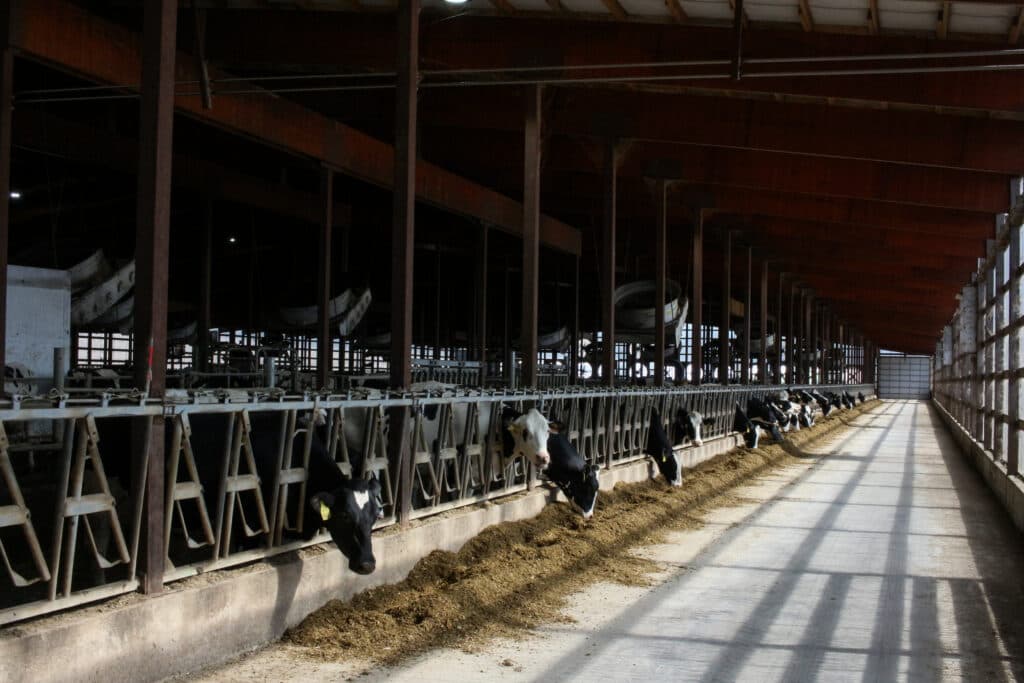


The world’s largest meat and dairy companies, many of which operate in Wisconsin, have made hundreds of claims that their practices are sustainable and promises of future climate protection initiatives. But a report released last month in the journal PLOS Climate found that hardly any of those claims are legitimate.
The report, authored by researchers at the University of Miami, assessed publicly made environmental claims and promises of the 33 largest meat and dairy companies in the world. The corporations assessed in the report includes companies with Wisconsin operations such as Saputo Cheese, Tyson Foods, JBS, Hormel Foods, Dairy Farmers of America and Nestle.
Since 2021, the corporations made 1,233 environmental claims but, according to the report, 98% of those claims can be called “greenwashing” because they were made without supporting evidence. Only three of the claims were backed with actual peer reviewed studies.
“This study is consistent with what we have experienced: big claims, big promises, but little in the way of quantifiable improvement in environmental quality,” said George Kraft, the former Director of the Center for Watershed Science and Education at UW-Extension and UW-Stevens Point who now sits on the science council of Wisconsin’s Greenfire.
The report’s authors argue that it’s important to assess the claims of these companies because corporate meat and dairy operations cause a huge proportion of global greenhouse gas emissions.
“Meat and dairy companies, which produce disproportionate amounts of pollution relative to other kinds of foods, have prioritized climate change in their sustainability initiatives,” the report states. “They make many promises and provide very little supporting evidence. Like the fossil fuel industry, which has used greenwashing over the last several decades to delay meaningful climate action, the meat and dairy industry may be misleading consumers and investors regarding whether and to what extent they are addressing environmental impacts, including climate change, with even less time to spare.”
In Wisconsin, economic forces have for decades pushed the state’s dairy industry to get bigger. Hundreds of factory dairy farms are now permitted to operate in the state, putting more cows on more concentrated plots of land while the state’s corporate dairy interests fight at the local and state level to prevent government regulation.
Tara Greiman, the Wisconsin Farmers Union’s director of conservation and stewardship, told the Wisconsin Examiner that corporate agriculture has been the dominant force in the industry for the last 50 years and the effect of that control on the environment is clear.
“They can say as much as they want, ‘look at all of our promises, look at what good stewards we are,’ but the fact of the matter is that our groundwater quality is depleting in the sectors that they control, our ecological habitat diversity depleting, we are losing farmers at the same time,” she said. “There’s other economic factors, but speaking in terms of just the climate measurements, they’re not doing a good job.”
Earlier this month, the environmental organization Clean Wisconsin released a report outlining the steps Wisconsin’s agricultural industry will need to take to help the state achieve its climate emissions goals. The research found that reducing nitrogen fertilizer use, reducing the amount of acreage used for corn-based ethanol production, practices such as no-till and cover crops, better livestock management and the planting of perennials instead of commodity crops would help put Wisconsin on the right track.
Chelsea Chandler, Clean Wisconsin’s climate, energy and air program director, told the Examiner the fact that corporate agribusiness feels the need to make sustainability claims is a first step. She said that sometimes companies are intentionally “overstating the benefits” of a practice, lack enough data or are extrapolating too much across different parts of the world. Still, the discussion can lead to helpful action and the adoption of scientifically backed solutions.
Clean Wisconsin’s climate solutions roadmap can help, Chandler said, “because it’s based on the latest science, it’s tailored specifically to Wisconsin, and it’s checking some of those claims that are overstated when it comes to the climate impacts.”
Chandler hopes that providing good information will affect investment and support, “whether that’s coming from private companies who are trying to improve their sustainability in their operations, or if that’s coming from governments through different kinds of incentive mechanisms and channeling those into the things that are really having an impact”
Both Chandler and Greiman said that deliberate choices built the food system we have today and it will take deliberate choices to build something more sustainable.
“We need a new food system. Growing corn, even if you’re doing no-till, even if you’re cover-cropping after it, if you’re only growing corn and soybeans, it’s not a regenerative system. Full stop,” Greiman said. “We have to have new markets, otherwise we’re just rearranging deck chairs, and the research is saying this.”